Judgment enforcement & asset tracing
Why Most Judgments Stay Uncollected(And What Actually Finds the Money)
By Chris Stevens · 2026-09-12

Most commercial judgments don't fail because the law is weak. They fail because the money was never traced.
The judgment problem
Most commercial judgments don't fail because the law is weak. They fail because the money was never traced.
By the time a debtor says 'I can't pay,' the LLCs have been layered, the properties quitclaimed, the UCC filings moved, and the beneficial interests reassigned to a cousin with a PO box. The judgment creditor is left holding a piece of paper that says they won — and a balance sheet that says they didn't collect.
The firms that enforce judgments well do one thing differently: they treat the debtor's paper trail as a map, not an afterthought.
Why discovery often misses the money
Discovery is powerful when the other side has to answer. But a debtor who has already moved assets is usually one step ahead of the subpoena. Bank statements show accounts that have been closed. Deposition answers name entities that no longer hold anything. The real trail is in the public filings recorded before the litigation started.
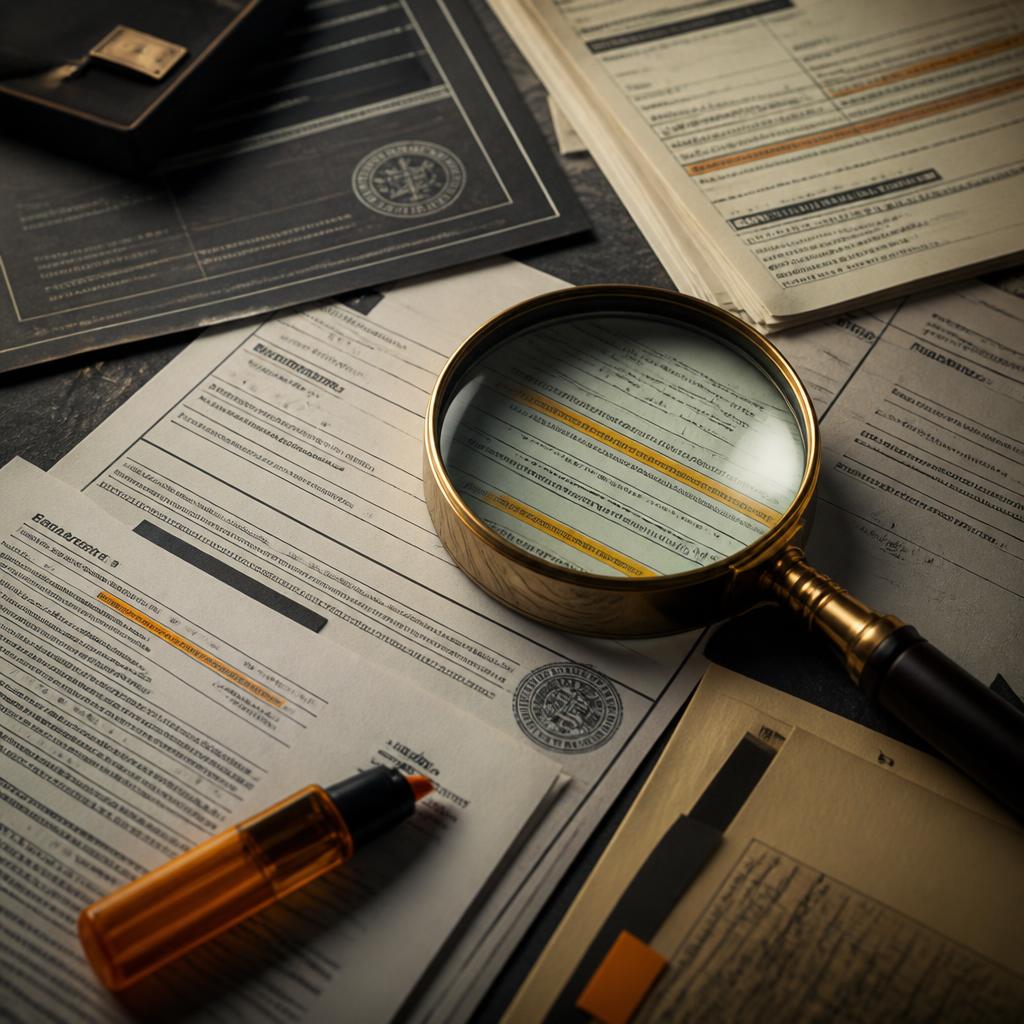
That's where asset tracing begins. Deeds, UCC-1 financing statements, corporate registrations, assumed-name filings, and court dockets are timestamped, jurisdictional, and hard to retract. They show who owned what, when, and through what structure — before anyone knew a lawsuit was coming.
What a recoverable paper trail looks like
A recoverable case usually has three layers:
- A recent transfer for nominal consideration — the $10 deed, the zero-dollar membership interest assignment, the sudden 'loan' to a related entity.
- A cluster of shell companies sharing addresses, agents, or officers — the same registered agent for six LLCs in three states is not a coincidence.
- A financial breadcrumb connecting the shell back to the debtor — a tax return Schedule E, a 1099, a wire confirmation, or an invoice ladder.
Each layer by itself is suspicious. Together, they become evidence of fraudulent conveyance that a court can act on.

How Ledgerhound turns records into a dossier
Ledgerhound reads the paper trail that people leave behind. We pull public records across jurisdictions, resolve entities across aliases and nominee directors, and score each transfer hop for recoverability.
The output is a sourced dossier: every asset with jurisdiction, filing date, retrieval timestamp, and chain of custody. It's built for counsel to use — whether that's a motion to set aside a fraudulent transfer, a garnishment, a charging order, or a receivership application.
Case Desk: unlimited traces for firms that enforce at scale
For firms with a docket of judgments or a portfolio of distressed debt, we offer Case Desk at $500 per month. It includes unlimited traces, priority document pulls, analyst review, and court-ready exports.
If you only need one file traced now, you can start with a Single Case Trace for $199. Either way, the goal is the same: turn a paper judgment into a located asset.

What happens after you submit a case
Secure intake takes about five minutes. Bring a name, a jurisdiction, and whatever documents you already have. Our team triages the file, runs the public-record trace, resolves entities, and delivers the dossier. Subpoenas, levies, and garnishments are executed by your attorney through the court — we locate the assets and the evidence, you enforce.
Start with a single case
If you have a judgment that isn't paying for itself, the next step is to trace the paper trail before more of it disappears. Submit a case securely and we'll tell you what can be found.